Two instances, one number
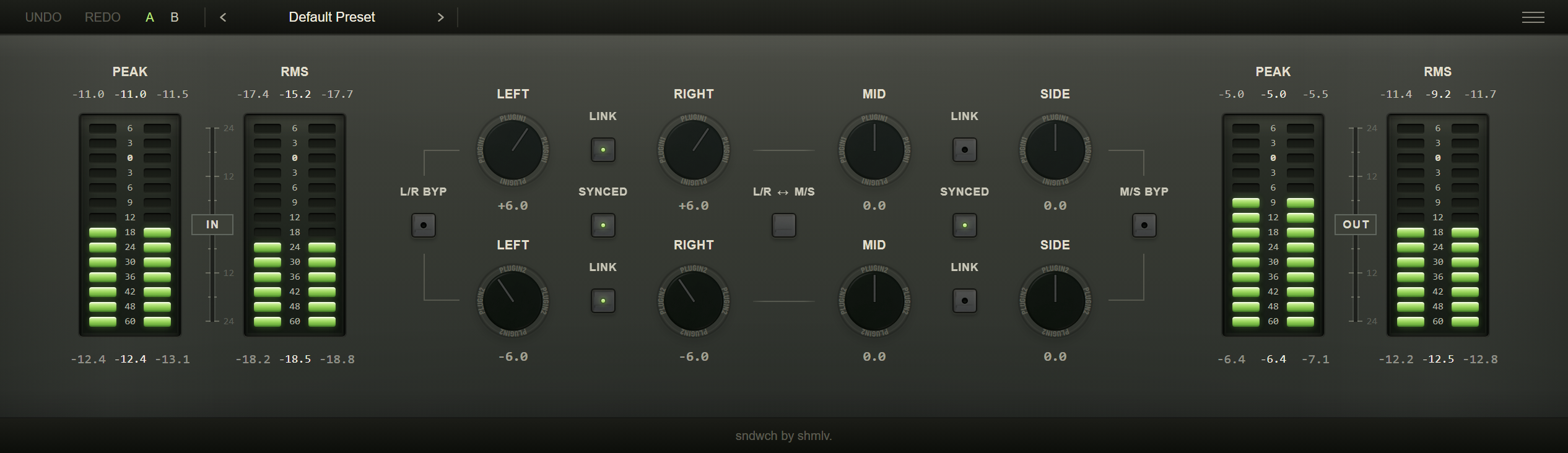
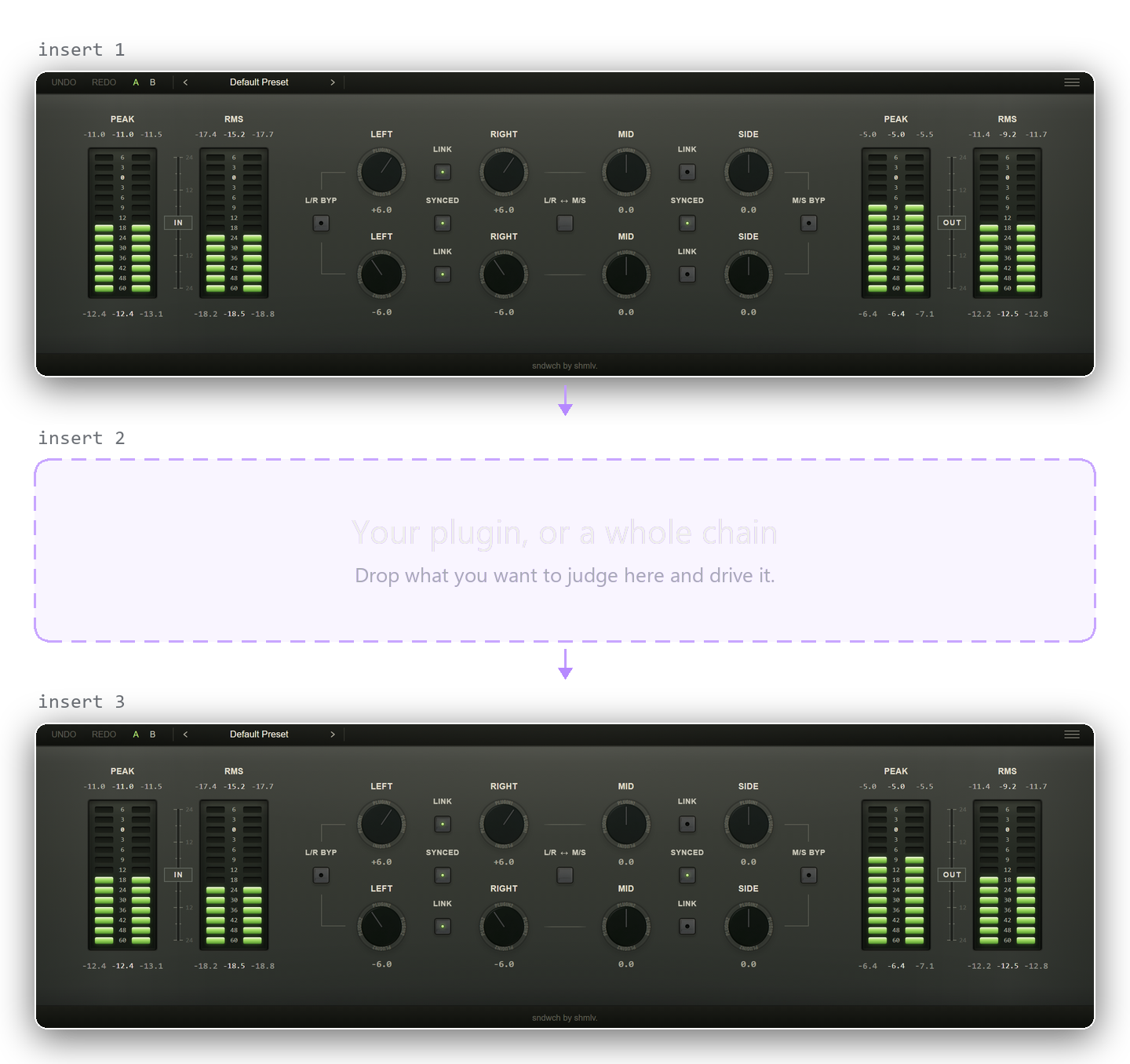
Insert sndwch, then the plugin you want to hear, then sndwch again. Set the gain on the first one. The second takes the same amount back out. Whatever sits between them is covered, so a whole chain works the same way, and there is nothing else to set up.
They find each other on their own
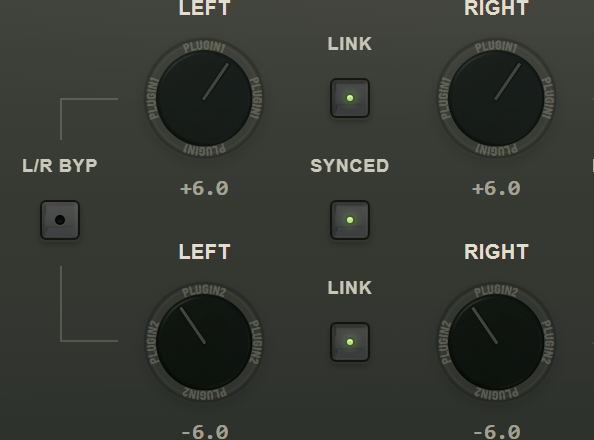
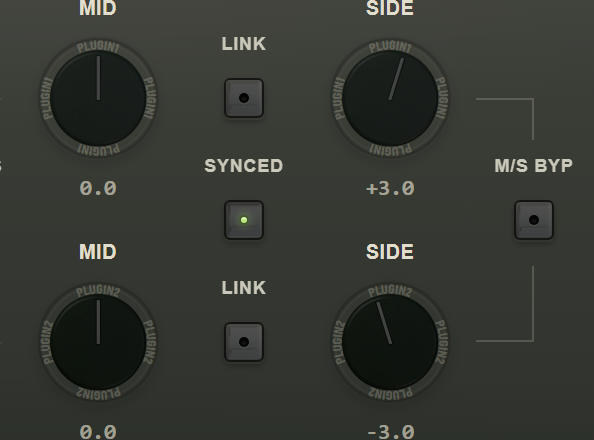
The first instance you insert becomes P1, the half that adds the gain — its knobs are the row marked Plugin 1. The second becomes P2 and takes the gain back out. There is no routing to draw and nothing to link by hand: the two connect automatically, and until the partner shows up the button between the rows reads Searching. A fresh pair also picks a free group by itself, so several pairs can live in one session, each keeping to its own group — and if you want to decide who pairs with whom, choose a group from the menu on both ends.
Now drive it
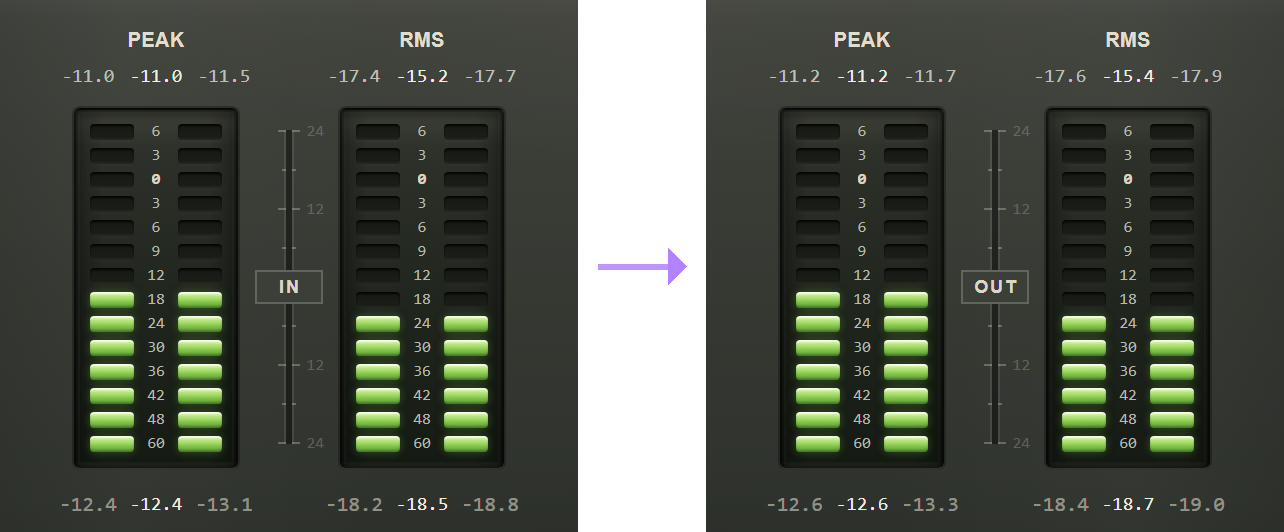
Push the compressor until it is doing far too much. Push the saturator until it falls apart. Every decibel you add going in comes back out coming out, without you touching a second trim. What the processor itself does to the level is still there to hear, which is the point. Then back it off until it is doing the right amount.
Why louder wins
Turn anything up slightly and it does not sound louder, it sounds better. That is how hearing works, and it is not a lapse in concentration. Every compressor, saturator, clipper and limiter gets louder as you push it, which is the exact moment you need to judge it honestly.
What it does not compensate
sndwch takes out exactly what it put in, and nothing else. It does not measure loudness and it never looks at the processor, so gain reduction, makeup gain, saturation and clipping all stay in the result — that is the processor's own work, and it is what you are listening for. What it does mean: if you raise the plugin's own output or makeup gain, that is your hand on the volume again. Leave those where they are while you listen.